
4 Tips to Keep Roof Rats Out of Your Attic in Locust Grove, GA
Roof rats are good climbers, which makes attics an easy target when trees, roof damage, or small openings give them a way inside. Once they find a sheltered space with access to food and water, they may continue using the same area to nest and move around your home.
Keeping roof rats out starts with making your home harder to access. Trimming branches, sealing openings, securing food sources, and maintaining your yard can reduce the conditions that attract them.
If you are already hearing scratching overhead or finding signs of rodents in your attic in Locust Grove, prevention alone may not be enough. Direct Pest Solutions can inspect your home at no cost, identify how they are getting inside, and recommend the appropriate roof rat control steps.
What are Roof Rats?
Roof rats are medium-sized rodents with a slender build. They typically measure about six to eight inches long, not including the tail, which can be seven to ten inches long. Their fur can range from black and dark brown to gray, often with a lighter underside. Large ears, a pointed nose, and a long tail can help distinguish them from other rat species.
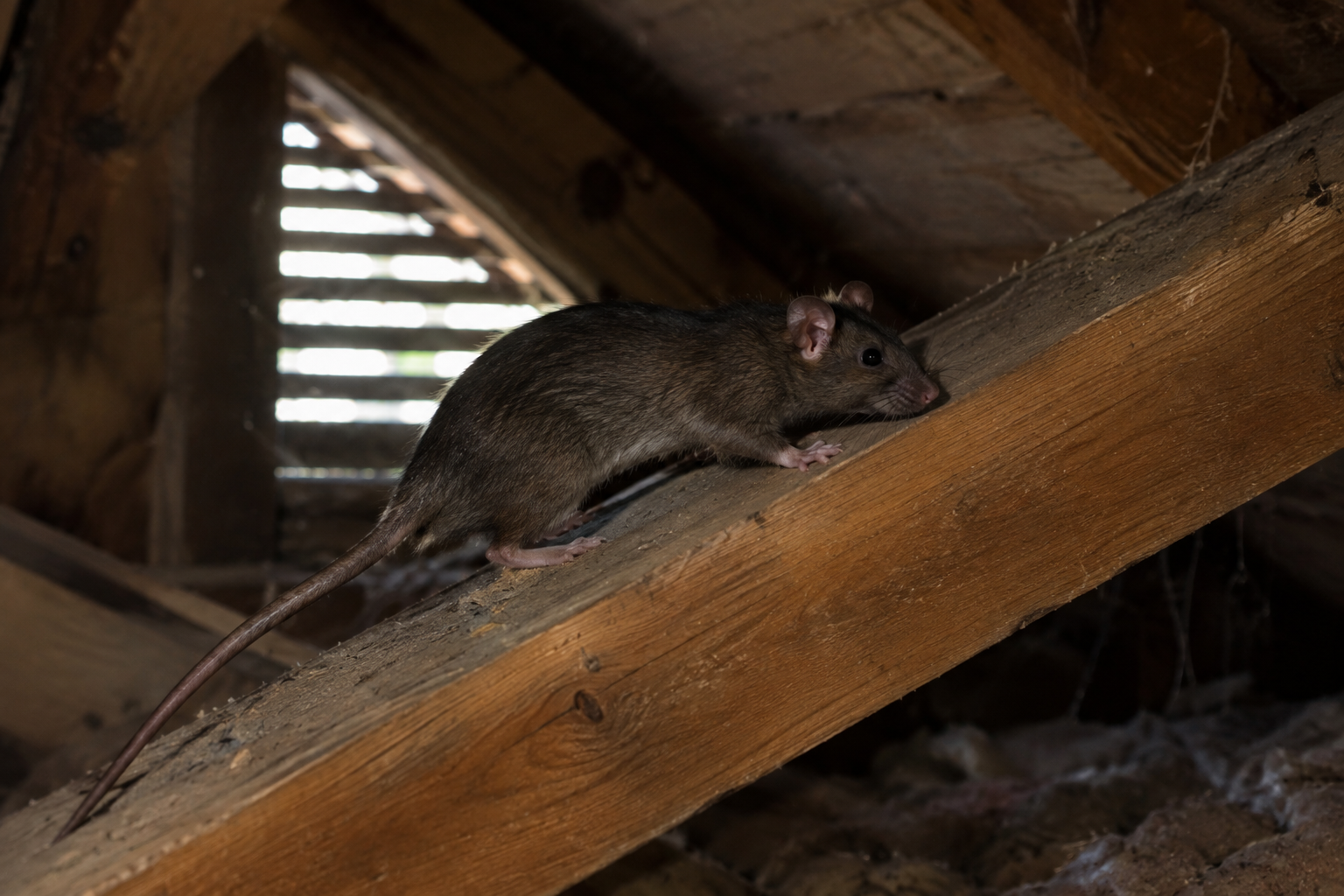
Roof rats are excellent climbers and prefer elevated, sheltered spaces such as attics, ceilings, soffits, and roof areas. They are most active at night, when they leave their hiding spots to look for food, water, and nesting materials. During the day, they may stay hidden in quiet areas around the roof or inside the attic, making them easy to miss until signs of an infestation appear.
These rats can squeeze through small openings and use tree branches, utility lines, and other routes to reach your roof. Gaps around soffit vents, gable vents, roof vents, cables, pipes, and damaged screens can give them a way inside. In the fall, they may also seek shelter indoors as outdoor food and nesting conditions change, which can make homes with easy access especially vulnerable.
The good news is that you can reduce these entry points and make your home less appealing to roof rats with a few simple steps.
Here are 4 Ways to Keep Roof Rats Out of Your Attic
Keeping roof rats out starts with making your home harder to access and less appealing as a source of food, water, and nesting. These four steps can help reduce the ways rats reach your attic and make your property less attractive to them
1. Trim branches away from your roof
Roof rats are strong climbers and can use tree branches, vines, and other vegetation to reach your roof. Once they reach the roof, they can look for openings around vents, soffits, shingles, and other vulnerable areas.
Keep tree branches trimmed back from the roof, and avoid letting vines or dense vegetation grow against the house. Pay particular attention to trees that sit close to the attic or roofline, as these can give rats an easy path onto the home.
2. Seal entry points around your home
Roof rats can squeeze through surprisingly small openings, so sealing one obvious hole may not be enough. Check the entire exterior of your home for gaps that could give them access to the attic or other enclosed spaces.
Look closely at:
- Attic vents and vent screens
- Soffits and fascia
- Roof edges and damaged shingles
- Chimneys and flashing
- Gaps around pipes, wires, and ducts
- Openings around utility lines
- Areas where the roof meets exterior walls
- Gaps around windows and doors
- Garage doors and other exterior doors
- The door connecting your garage to the house
Repair damaged screens and roofing materials, and use appropriate materials to seal gaps around exterior openings. For doors, install thick weatherstripping along the bottom, especially on garage doors, and make sure the door between the garage and house closes tightly.
3. Cut off their food and water sources
Roof rats are more likely to stick around when they have easy access to food and water. Outdoor trash, pet food, bird feeders, fallen fruit, and other food sources can make your property more attractive to rodents.
Keep garbage containers tightly closed and avoid leaving pet food outside overnight. Clean up fallen fruit from trees, secure animal feed, and check outdoor areas for standing water or leaking faucets.
If you use bird feeders, keep them away from the house and clean up spilled seed regularly. Reducing these food and water sources can make your property less attractive to rats.
4. Regularly maintain your yard
A cluttered yard can give roof rats places to hide, nest, and move around unnoticed. Woodpiles, old furniture, boxes, debris, and dense vegetation can all create sheltered areas close to your home.
Keep your lawn mowed and your garden maintained. Remove unnecessary clutter, store firewood away from the house and off the ground, and clear away piles of leaves or other debris that could provide cover.
A well-maintained yard gives rodents fewer places to hide near your home and can make it easier to spot signs of activity.
Signs of Roof Rats Infestation
Roof rats are mostly active at night, so the first signs of an infestation may appear before you ever see one. Sounds, droppings, damage, and nesting materials can all provide clues that rats are using your attic or another part of the home.
Common signs include:
- Scratching or scurrying sounds at night
- Small, dark droppings
- Chewed wiring, wood, or other materials
- Gnaw marks around openings
- Disturbed or damaged insulation
- Shredded materials used for nesting
- Greasy marks along frequently used paths
- Unusual odors
- Signs of activity around the roof or attic
- Holes or gaps that appear to have been enlarged
If you hear movement overhead after dark, pay attention to where the sounds are coming from. Repeated activity in the same area can indicate that rats are nesting or traveling through the attic.
Are Roof Rats Dangerous?
Roof rats can create both property and health concerns when they move into an attic. Their droppings, urine, saliva, and nesting materials can carry germs, and people can become exposed when they come into contact with contaminated materials or breathe in particles stirred up from rodent waste. The CDC lists several diseases that can be spread by rodents, including hantavirus, leptospirosis, salmonellosis, and rat-bite fever.
Some of these illnesses can cause serious symptoms. Hantaviruses can cause hantavirus pulmonary syndrome, which can lead to fever, muscle aches, fatigue, and severe breathing problems. Leptospirosis can cause fever, headache, muscle aches, vomiting, and other symptoms and can lead to kidney damage, meningitis, liver failure, or breathing problems in severe cases. Rat-bite fever can cause fever, vomiting, headache, muscle pain, joint pain, and a rash after exposure to an infected rodent.
The risk is not limited to the animal itself. An attic with damaged insulation, contaminated materials, or exposed wiring can become a bigger household problem if the infestation is left untreated.
What Are the Common Damages Caused by Roof Rats?
Roof rats can cause more than a noisy attic. Once inside, they may chew, nest, and leave waste throughout the areas they use.
Potential damage includes:
- Electrical wiring: Rats can chew through wiring, which can create electrical problems and increase fire risks.
- Insulation: Nesting and movement can disturb insulation and reduce its effectiveness.
- Wood and building materials: Gnawing can damage wood and other materials around the attic.
- Stored belongings: Boxes, paper, fabric, and other materials can become nesting material.
- Attic surfaces: Droppings and urine can contaminate areas where rats are active.
The longer an infestation continues, the more opportunities rats have to damage the space. Finding and addressing the problem early can help limit the amount of repair needed.
Can You Get Rid of Roof Rats Yourself, DIY-Style?
If you already have roof rats in the attic, you can try a few DIY methods. Snap traps are one of the most common options. Place appropriately sized rat traps along walls, near areas where you have noticed droppings or other signs of activity, and in locations rats are likely to travel. Keep traps and bait away from children and pets, and continue trapping until there are no more signs of rodent activity
You can also try pre-baiting if the rats are avoiding the traps. Roof rats may be cautious around new objects, so placing bait on an unset trap before setting it can give them time to become comfortable with it. Check traps regularly and follow safe handling and disposal practices when a rat is caught.
Also be careful when cleaning a rodent-infested attic. Rodent droppings, urine, and nesting materials can contain germs, and the CDC recommends avoiding sweeping or vacuuming dry droppings, urine, or nesting materials because this can put contaminated particles into the air. If you find a significant amount of rodent waste or contaminated insulation, professional cleanup and pest control may be safer than handling it yourself.
How Do You Know When to Call for Professional Help?
For a small, recent problem, trapping may reduce the number of rats in the attic. However, DIY removal becomes more difficult when rats have established a nest, multiple rats are using the space, or you cannot determine where they are entering.
Consider professional roof rat control if you:
- Continue hearing scratching or scurrying at night
- Find repeated droppings in the attic
- Notice damaged wiring or insulation
- See rats entering or leaving the home
- Find nesting material
- Discover an opening but cannot determine how many rats are inside
- Have tried traps without resolving the activity
- Keep finding new signs after sealing obvious openings
An inspection can help determine where the rats are nesting, how they are entering the home, and what needs to be addressed. Professional rodent control can also help address an active infestation rather than relying on prevention alone.
Roof Rats Don’t Belong in Your Attic. Get Professional Help Today.
Catching one roof rat does not always mean the problem is over. If rats have found a way into your attic, there may be others hiding nearby or another opening giving them access to your home. Repeated scratching, fresh droppings, or new damage after setting traps are signs that the infestation may need a more thorough approach.
Direct Pest Solutions can inspect your attic and the exterior of your home to look for active rat activity, nesting areas, and possible entry points. Getting the problem properly identified can help you avoid wasting time on traps that are not solving the underlying issue.
If you are hearing rats in your attic or finding signs of an infestation in your Locust Grove home, we offer professional rodent control services and also crawlspace insulation to help restore affected areas.. You can request a free quote or call (678) 722-5533 to schedule an inspection.
Frequently Asked Questions
What is a roof rat?
A roof rat is a climbing rodent with a slender body, large ears, a pointed nose, and a long tail. Roof rats are well suited to living in elevated spaces and may use attics as shelter or nesting areas.
Do roof rats come into the house?
Yes. Roof rats can enter homes through gaps around roofs, vents, soffits, chimneys, pipes, doors, and other openings. Once inside, they may move between the attic, walls, and other areas of the home.
How do I get rid of roof rats?
Getting rid of roof rats usually requires more than trapping individual animals. Removing food sources, securing entry points, addressing nesting areas, and dealing with any active infestation can help prevent the problem from continuing.
How to know if you have roof rats?
Look for signs such as nighttime scratching, small droppings, gnaw marks, damaged wiring, disturbed insulation, nesting material, and activity around the roof or attic. An inspection can help confirm what is causing the signs.
What smell do rats hate the most?
Strong odors such as peppermint or other household scents are sometimes suggested as rat deterrents, but smells alone are unlikely to solve an established infestation. Removing food sources, sealing openings, and addressing the active infestation are more reliable steps.
How quickly can a pest removal team inspect my attic in Locust Grove?
Once an appointment is scheduled, a technician can inspect your attic, identify what is causing the noise, and determine how it got inside. Request a free quote online or call (678) 722-5533 to schedule an inspection with Direct Pest Solutions.