
6 Reasons Rat Traps Aren't Working in Your McDonough Home
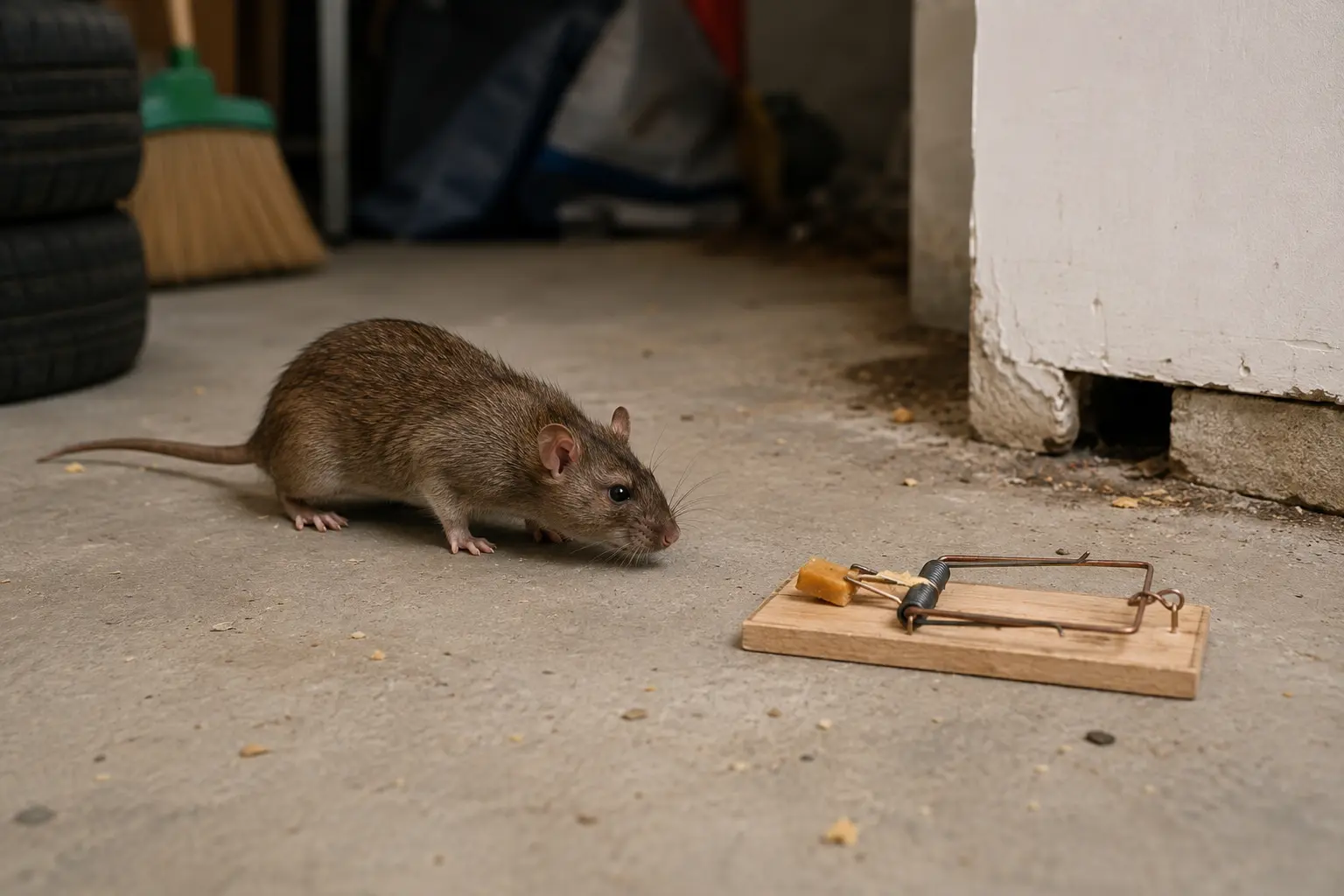
You put out a rat trap, added some bait, and waited. But days later, the trap is still sitting there untouched. If this sounds familiar, you’re not alone. This is one of the most common complaints homeowners have once rats move in. Mild winters and wooded areas give rats plenty of places to stay around McDonough year-round. If your rat traps aren’t working, the problem usually comes down to a few fixable habits.
Before you toss another trap in frustration, Direct Pest Solutions offers free quotes and thorough inspections to help McDonough homeowners with rats and other rodent control.
Below are some common mistakes that can make rat traps less effective and what you can do instead.
6 Reasons Your Rat Trap Isn’t Working
A rat trap can look like a simple solution, but small details can make a big difference. From the bait you use to where you place the trap, a few common mistakes can make it much harder to catch a rat.
1. You’re Using the Wrong Bait
Rats don’t always go for whatever you put in front of them. If the bait doesn’t interest the rat, there’s little reason for it to go near the trap. And while cheese is the classic rat bait we see in cartoons, real rats aren’t necessarily lining up for it.
Peanut butter tends to be a better option because it has a strong smell and sticks to the trap. Nuts, bacon, and dried fruit can also work well. Whatever you choose, use fresh bait and avoid putting on too much. A small amount with a strong smell is often enough to get a rat’s attention.
2. Your Traps Are in the Wrong Spot
Even with the right bait, a trap won’t do much if it’s sitting somewhere the rat never goes. Rats tend to stay close to walls and avoid crossing wide-open spaces, so placing a trap in the middle of a room may not get you very far.
Look for signs of activity along walls, behind appliances, around cluttered corners, and near garage edges. Attics and crawl spaces can also be common travel areas. Placing traps along these routes puts them where rats are already moving.
It also helps to use more than one trap when dealing with an active infestation. Using several traps along active travel routes can improve your chances of catching rats, especially when signs of activity appear in multiple areas. The more of their usual travel routes you cover, the better your chances of catching them.
3. Rats Have Easier Food Elsewhere
Sometimes, the trap isn’t the problem. If a rat has an easier food source nearby, it may have little reason to investigate your bait. This is an easy detail to overlook when you’re trying to deal with a rat problem.
Take a look around your home for anything that could be attracting them. Bird feeders, open trash cans, pet food left outside, and food scraps can all give rats another option. Wooded lots and green areas around McDonough can also provide plenty of natural food sources.
Before adding more traps, try removing these food sources where possible. Keeping trash sealed, bringing pet food indoors, and cleaning up spilled birdseed can make your bait more appealing and give your traps a better chance of working.
4. Rats Are Naturally Suspicious of New Objects
Rats tend to be cautious around unfamiliar objects, which can make them avoid a trap altogether. This behavior is called neophobia and can explain why a newly placed trap gets ignored, especially when it appears along a familiar travel route.
One way to get around this is to pre-bait the trap. Leave the trap unset with a small amount of bait for a few days. This gives the rat time to approach it without being startled by the trap. Once you notice the bait is being eaten, you can set the trap using the same bait and leave it in the same spot.
5. You’re Using the Wrong Trap Type
Not every rat trap works the same way, and the right choice can depend on the situation. If you’re using a trap that isn’t suited to the size or behavior of the rats in your home, you may end up wasting time.
Snap traps are a common choice because they’re affordable and can work well when placed correctly. Electronic traps are another option and can make cleanup easier. Glue traps are generally less useful for larger rats, so they may not be the best choice if you’re dealing with a full-grown rat.
6. The Rat Population is Growing Faster Than the Traps
Sometimes, the problem isn’t that your traps aren’t working. There may simply be more rats than you can keep up with. If you’re catching one rat but continuing to find fresh droppings, hear scratching, or spot new signs of activity, the population may be growing faster than you’re removing it.
Rats reproduce quickly, with pregnancy lasting only about 21–23 days. That means a small infestation can grow quickly if the source isn’t addressed. This is especially frustrating when you keep setting traps but the signs of activity never seem to stop.
If new signs keep appearing despite your trapping efforts, it’s worth looking beyond the traps. Finding where rats are nesting and how they’re getting inside can help address the problem at its source.
Easy DIY Rat Control Methods
If you’re dealing with a small rat problem, a few simple steps can help you get things under control. Try these DIY methods before deciding whether you need professional help:
- Seal entry points: Check around doors, vents, pipes, and other openings. Seal small gaps that rats could use to get inside.
- Keep food sealed: Store food in airtight containers and clean up crumbs or spills quickly.
- Secure your trash: Keep garbage in containers with tight-fitting lids, both inside and outside your home.
- Remove outdoor food sources: Bring pet food indoors and clean up spilled birdseed around feeders.
- Reduce clutter: Clear out piles of boxes, debris, and other areas where rats can hide or nest.
- Set traps along travel paths: Place traps near walls, behind appliances, and in other areas where you’ve noticed signs of rat activity.
- Check traps regularly: Replace old bait and reset traps as needed. Avoid leaving a trap untouched for weeks if there are no signs of activity.
These steps can help with minor activity, but they may not be enough for a larger infestation or rats that keep returning.
Signs You Need Professional Rat Control
Sometimes, changing your bait or moving a few traps is enough to solve a small rat problem. But if you’ve tried several approaches and you’re still seeing signs of activity, there may be more rats than your traps can handle.
You may need professional rodent control if you’re noticing:
- Fresh rat droppings around your home
- Scratching or movement sounds in the walls, attic, or crawl spaces
- Chewed wires, insulation, or other materials
- New holes or gaps where rats may be getting inside
- A strong or persistent smell coming from hidden areas
- Rats continuing to appear even after setting multiple traps
Rats can get into areas that are difficult to reach, making DIY trapping less effective. A professional can inspect your home, identify where the rats are getting in, and determine the best way to address the infestation.
How Professional Rat Control Differs from DIY Attempts
DIY trapping can help with a small rat problem, but professional control takes a more complete approach. Here’s how the two methods compare:
DIY Rat Trapping | Professional Rat Control |
| Places traps based on where rats are seen or suspected | Inspects the property to identify travel paths and entry points |
| Usually focuses on catching rats already inside | Addresses both the existing infestation and how rats are getting inside |
| Homeowners choose and place traps themselves | Technicians select trap types and placement based on the situation |
| May rely on traps alone | Combines trapping with exclusion and other control methods |
| Can miss rats hiding in walls, attics, or crawl spaces | Inspects hidden areas for signs of activity and access points |
| Often involves trial and error | Uses a targeted approach based on the inspection |
If DIY trapping isn’t solving the problem, rodent exclusion services can help address how rats are getting inside in the first place.
Stop Rats From Infesting Your Home in McDonough
Getting rid of the rats you see is only part of the solution. If they can still get inside, new rats can eventually take their place. That’s why effective rat control should address both the infestation and the conditions allowing rats into your home.
Direct Pest Solutions starts with a thorough inspection to find entry points, signs of activity, and areas where rats may be hiding. From there, our team can recommend the right approach for your property, including wildlife removal and trap setting when needed.
If recurring rodent problems are linked to damp crawl spaces, a crawlspace moisture barrier may also help make the space less appealing to pests.
If you’re dealing with rats in your McDonough home, contact Direct Pest Solutions for a free quote and thorough inspection to keep rats away for good
Frequently Asked Questions
What keeps rats away permanently?
Seal entry points, secure food and trash, remove outdoor food sources, and reduce areas where rats can hide. A professional inspection can help find problems that are easy to miss.
What kills rats immediately in the house?
Snap traps and electronic traps can kill rats quickly when placed correctly. Avoid using poison indoors, as rats may die in walls or other hidden areas.
How long does it take to get rid of rats with traps?
It depends on the size of the infestation and where the rats are hiding. Small infestations may improve within several days, while larger problems can take longer.
Is professional rodent proofing legally required in McDonough?
McDonough homeowners are not legally required to hire a professional for rodent proofing. However, homeowners are responsible for maintaining their property and addressing conditions that could create health or safety concerns.
How long does professional rat extermination last?
It depends on the size of the infestation and how rats are getting inside. Follow-up visits or exclusion work may be needed for recurring problems.
When is rat activity highest in McDonough?
Rats can be active year-round in McDonough, but you may notice more activity during cooler months as they look for warm shelter and reliable food sources. They can also move indoors after heavy rain or when outdoor food becomes harder to find.
How quickly can an expert inspect my McDonough home for rats?
It depends on appointment availability. Direct Pest Solutions offers inspections and free quotes for McDonough homeowners dealing with rat and rodent problems. Request a free quote or call (678) 722-5533 to get started.