
In Georgia, you’ll most often see carpenter, fire, Argentine, pharaoh, and odorous house ants. Each behaves differently: carpenter ants damage moist wood. Fire ants sting. Argentine ants form supercolonies. Pharaoh ants spread pathogens. Odorous house ants smell like rotten coconut when crushed. Identification guides your treatment and safety steps, like avoiding mounds and using targeted baits. Keep going to learn species-specific signs, risks, and practical control tips.
The Cliff Notes
- Watch for carpenter ants that excavate moist or decayed wood, risking structural damage.
- Avoid fire ant mounds outdoors; their aggressive stings can cause severe reactions.
- Argentine ants form large supercolonies and need sugar-based colony-wide baiting.
- Pharaoh ants nest indoors year-round, spread pathogens, and require targeted gel baits.
- Odorous house ants contaminate food and are best controlled with strategically placed baits.
Key Takeaways for Georgia Homeowners
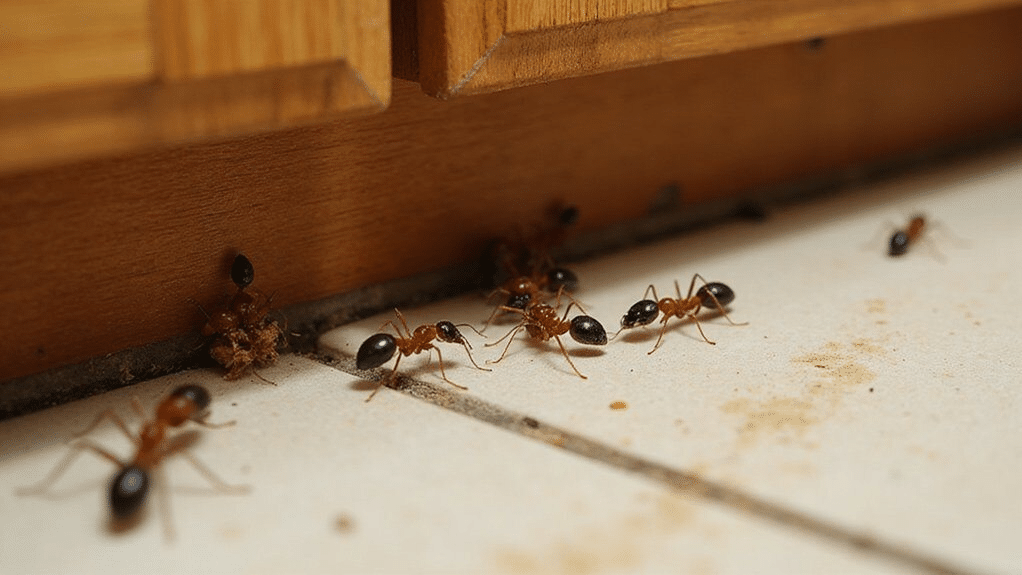
Because Georgia hosts several problem ant species, recognizing the differences and acting quickly is essential. Carpenter ants can damage wood. Fire ants sting and mound outdoors. Argentine ants invade in large numbers. Smaller species like pharaoh and odorous house ants can persist indoors year-round. Monitor seasonal activity—spring and summer see a spike—while expecting some indoor pests year-round. For an ant infestation, GA homeowners should start with ID: look for wood tunneling, visible mounds, trailing workers, or sweet-foraging ants. Tailor actions: seal entries, reduce moisture, remove food sources, and use species-appropriate baits or professional services for carpenter and fire ant problems. Knowing types of ants Georgia encounters lets you choose targeted, effective responses quickly.
Why Identifying Ant Species Matters
You’ll get better results when you identify the ant species because treatments need to match the pest. Fire ants, carpenter ants, and Argentine ants all require different approaches. Knowing the species also tells you what health or safety risks to watch for, from stings to contamination. Finally, identifying ants early lets you plan long-term prevention tailored to their behavior and food preferences. Understanding the common species of ants in your area can help address potential infestations more effectively.
Targeted Treatment Methods
When you can pinpoint which ant species you’ve got, treatment becomes far more effective and safer. Carpenter ants call for swift professional intervention to prevent structural damage. Fire ants need careful handling because of painful stings. Argentine ants often require colony-wide baiting to break up supercolonies. Once identified, match methods to behavior: have professionals locate and remove carpenter nests inside wood, use targeted mound treatments or trained technicians for fire ant colonies, and deploy sugar- or protein-based baits for Argentine ants to reach multiple queens. For pharaoh and odorous house ants, choose baits based on food preference and place them along trails and nesting sites. Proper species-focused tactics reduce repeat treatments and lower pesticide use while improving long-term control.
Health and Safety Risks
If you don’t identify the ant species early, you can overlook serious health and safety risks: fire ants can deliver painful stings and trigger allergic reactions. Pharaoh ants can spread pathogens like salmonella in kitchens or hospitals. Carpenter ants can weaken structural wood. Even odorous house ants and Argentine ants can contaminate food or disrupt ecosystems. Knowing which ant you’re dealing with guides safer, more effective responses.
- Health risks: Some ants transmit bacteria or sting, so prompt ID reduces infection and allergic incidents.
- Food safety: Identifying food-contaminating species helps you protect meals and storage areas.
- Structural safety: Spotting carpenter ants early prevents costly wood damage and hazards.
- Ecological impact: Recognizing invasives like Argentine ants lets you act to protect local species and long-term yard health.
Long-Term Prevention Planning
Having already seen the health, food, and structural risks different ants pose, planning long-term prevention comes down to knowing exactly what you’re up against. You should identify the species—fire, carpenter, Argentine or others—because each needs a different response. Carpenter ants call for baiting plus inspection and repair of damaged wood. Fire ants demand quick identification to reduce sting risks and protect family and pets outdoors. Argentine ants form massive colonies, so early detection and perimeter treatments can stop rapid escalation. Look for trails, nests, and food preferences to guide tactics. With species-specific knowledge, you’ll choose the right baits, sealing, and habitat changes, lowering the chance of recurrence and saving time and money over the long run.
Carpenter Ants: Identification and Risks
Carpenter ants are the largest common ants you’ll see in Georgia—6 to 12 mm long and usually black or red-and-black—and they’re worth noticing quickly because they excavate moist, decayed wood to build extensive galleries that can weaken structures over time. You’ll spot sawdust piles near entry points and ant trails at night; unlike termites, they don’t eat wood but hollow it out for nests. Don’t ignore early signs—structural damage worsens fast. You should seal moisture sources, remove rotting wood near foundations, and keep firewood away from the house to reduce nesting opportunities. If you find active galleries or many workers, call professional pest control for thorough inspection and treatment.
- Size and color identification
- Nesting in moist, decayed wood
- Signs: sawdust and nocturnal trails
- Professional removal recommended
Fire Ants: Identification and Safety Tips
You’ll recognize fire ants by their reddish-brown color, 2–6 mm size, and large dome-shaped mounds in sunny lawns. They’re aggressive and will sting in groups, causing painful reactions and, rarely, anaphylaxis. To stay safe, keep children and pets away from mounds, remove food sources, and call a professional for baiting or mound treatments.
Appearance and Behavior
If you see reddish-brown ants about 2–6 mm long swarming a large, dome-shaped mound in a sunny spot, you’re likely looking at fire ants. You’ll notice they move quickly and act aggressively if the mound is disturbed, often pouring out in numbers to defend their nest. For safety, don’t poke or step on mounds and wear closed-toe shoes when walking near likely areas like yards and sidewalks.
- Appearance: reddish-brown, 2–6 mm, distinct dome mounds in sunny locations.
- Movement: rapid, coordinated rushes from the mound when threatened.
- Behavior: highly territorial; they defend nests aggressively and in groups.
- Precaution: maintain distance from mounds and avoid disturbing the soil.
Fire ants are most prevalent during the summer peak season, making it crucial to treat your yard early to prevent infestations.
Bite and Sting Risks
Carpenter ants are the largest common ants you’ll see in Georgia—6 to 12 mm long and usually black or red-and-black. They’re worth noticing quickly because they excavate moist, decayed wood to build extensive galleries that can weaken structures over time. You’ll spot sawdust piles near entry points and ant trails at night; unlike termites, they don’t eat wood but hollow it out for nests. Don’t ignore early signs—structural damage worsens fast. You should seal moisture sources, remove rotting wood near foundations, and keep firewood away from the house to reduce nesting opportunities. If you find active galleries or many workers, call professional pest control for thorough inspection and treatment.
Those reddish-brown fire ants that rush out of dome-shaped mounds don’t just bite—they sting, and their venom can cause painful welts, itching, and in some people, serious allergic reactions like difficulty breathing or widespread swelling. You’ll spot colonies by their sun-exposed, dome-shaped nests and 2–6 mm reddish workers. If you disturb a mound, expect many ants to swarm and deliver multiple stings quickly, increasing the chance of severe local reactions or systemic anaphylaxis. Treat minor stings with washing, cold compresses, and antihistamines if needed, but seek prompt medical care for breathing trouble, dizziness, or extensive swelling. Always exercise caution around mounds; even small disturbances can provoke mass attacks that raise real safety concerns outdoors. Additionally, fire ants can rapidly multiply if not addressed, making early intervention crucial.
Home Safety Steps
Because fire ants are unmistakable — small, reddish workers swarming from sun-exposed, dome-shaped mounds — you should treat any colony you find as a hazard and avoid disturbing it. Mark the spot and keep children and pets away. Wear long sleeves, pants, closed shoes and gloves if you must be nearby, and use EPA-registered insect repellent on exposed skin. Inspect your yard regularly, especially sunny areas, and remove small mounds promptly before they grow. For active or large colonies, call a licensed pest professional to apply safe, effective treatments rather than attempting DIY mound flooding or stirring.
- Mark and cordon off detected mounds.
- Wear protective clothing and repellent.
- Inspect and remove new mounds quickly.
- Hire professionals for active colonies.
Argentine Ants: Behavior and Control Challenges
When Argentine ants find a reliable moisture or sugar source, they can rapidly establish vast supercolonies with multiple queens, making them especially hard to eliminate. You’ll spot small dark brown to black workers trailing into kitchens, bathrooms, or near landscaping irrigation. They’re drawn to sugary spills and damp areas, so removing standing water, fixing leaks, and storing food airtight cuts attraction. Because colonies are huge and multiple-queened, surface treatments rarely solve the problem; you’ll need targeted sugar-based baits that foraging workers carry back to nests. These ants can displace native species, altering your yard’s ecology and encouraging other pests. Preventive maintenance—sealing entry points, trimming vegetation away from foundations, and routine inspections—helps keep them out.
Pharaoh Ants: Small Size, Big Problems
You’ll notice Pharaoh ants are tiny—only about 2 mm long—so they can slip into gaps you might not even see. They’re tough to control because they nest inside buildings in places like insulation, behind baseboards, and even electronics. Focus on sanitation and targeted gel baits to manage them before colonies grow and spread.
Tiny Size, Tough to Control
Pharaoh ants measure only about 2 mm, but their tiny size hides a huge problem: colonies can swell to millions of workers with multiple queens, making them exceptionally hard to eliminate. You’ll notice tiny foragers indoors, and because they reproduce fast and split colonies, DIY sprays often make things worse.
- Health risk: they can carry pathogens like salmonella, so you shouldn’t ignore infestations, especially around food or in healthcare settings.
- Persistence: multiple queens mean killing some workers rarely stops the colony; populations rebound quickly.
- Control methods: gel baits are effective because workers share bait, reaching the colony without causing mass dispersal.
- Professional help: pest pros use targeted baits and monitoring to avoid accidental colony breakup and long-term recurrence.
Nesting Inside Buildings
Small size lets these ants slip into the warm, humid crevices of your home—behind baseboards, inside insulation, and even inside electronics—where they set up hidden, sprawling colonies. You’ll often miss them until trails or contamination show up because Pharaoh ants are only about 2 mm long and nest deep indoors. Their colonies can balloon to millions of workers with thousands of queens, so breaking them up usually makes things worse unless you use targeted methods. You should take early detection seriously: they spread pathogens like salmonella and pose real risks in homes and care facilities. Gel baits that match their foraging preferences are the most effective control tool for indoor infestations; DIY sprays often scatter colonies and prolong the problem.
Odorous House Ants: Signs and Smells
Spotting odorous house ants can be tricky because they’re only about 2.4–3.3 mm long and blend into dark surfaces, but crush one near a suspected trail and you’ll notice a distinct rotten-coconut smell that helps confirm their identity. You’ll most often find them near kitchens and sinks, drawn to sugary spills and moisture. They won’t damage wood like carpenter ants, but they’ll contaminate food and create unsanitary conditions. Control usually relies on baiting systems; professional guidance improves success. Watch for these specific signs:
Tiny dark ants leaving slow trails near kitchens — crush one and smell rotten coconut; baiting controls are most effective.
- Tiny dark brown or black ants moving in slow, consistent trails.
- Clusters near food sources, especially sweet residues.
- Visible nests in wall voids or under appliances.
- That telltale rotten-coconut odor when crushed.
Seasonal Patterns of Ant Activity in Georgia
Because Georgia’s warm, humid climate favors ants, you’ll notice activity climbing in spring and peaking through summer as they search for food, moisture, and nesting sites. Fire ants become especially visible then, building mounds in lawns and posing risks to people and pets. Carpenter ants emerge in late spring, foraging and seeking moist wood for nests, so you’ll spot them near structures. Argentine ants thrive in the heat and humidity, forming expansive foraging trails and supercolonies across yards and foundations. Some species, like odorous house ants and pharaoh ants, stay active year-round and can cause indoor problems regardless of season. Knowing these patterns helps you recognize when outdoor control and vigilant indoor inspection are most important.
DIY Prevention Strategies for Homes and Businesses
As activity ramps up in spring and peaks through summer, it’s smart to pair seasonal awareness with practical steps you can take year-round to keep ants out. You should seal entry points by caulking cracks around windows, doors, and utility lines so ants can’t slip inside. Keep surfaces wiped, floors swept, and food in airtight containers to remove attractions. Manage your yard by trimming branches and clearing debris to limit nesting sites. Fix leaks and improve drainage because moisture draws species like Argentine ants. You can also use DIY ant baits matched to the species — sugar-based for sweet-loving ants — to interrupt foraging and reduce colonies over time. Additionally, implementing year-round pest control can help ensure that your home remains protected from recurring infestations.
- Seal cracks and gaps
- Maintain indoor cleanliness
- Trim vegetation and remove debris
- Fix moisture issues and use targeted baits
When to Call a Professional Pest Control Service
If ant trails, visible nests, or repeated stings show up despite your DIY efforts, it’s time to call a professional pest control service. You should also contact experts when ants are in kitchens, schools, or hospitals, when carpenter or fire ants threaten structure or safety, or when baiting and traps haven’t stopped activity. Professionals use integrated pest management to locate colonies, apply targeted treatments, and set prevention plans to avoid recurrence. Don’t wait for spread or more stings; timely intervention limits damage and health risks. Additionally, awareness of local pest trends can enhance your prevention efforts.
| Situation | Risk | Recommended action |
|---|---|---|
| Visible nest | Structural or colony growth | Call pro |
| Repeated stings | Health hazard | Urgent call |
| DIY failure | Ongoing infestation | Schedule service |
| Sensitive area | High risk | Immediate pro care |
Frequently Asked Questions
What Ants Are Infesting My House?
It’s likely you’ve got carpenter, fire, Argentine, pharaoh, or odorous house ants; check for wood damage, painful stings, large trails, tiny yellow workers, or a coconut smell when crushed to narrow down species and choose treatment.
What Are the Black Ants in My House in Georgia?
About 70% of indoor ant complaints involve species like carpenter, odorous house, or Argentine ants. You’re likely seeing one of those black ants; check size, trails, and wood damage to distinguish and decide on control steps.
How Do I Find the Source of an Ant Infestation?
Start by following ant trails to locate entry points and nests; check kitchens, pantries, baseboards, wood for shavings, and damp areas. Inspect leaks, set bait stations to monitor species, then seal and eliminate the nest.
Why Do I Have so Many Ants in My House Right Now?
Because they’re following food, moisture, or nesting opportunities, you’ve got so many ants; imagine a scented breadcrumb trail leading dozens inside. Clean up residues, fix leaks, seal cracks, and they’ll stop finding welcome shelter.