
Raccoons in Attic: Why They’re So Common During Fall in Locust Grove, GA?
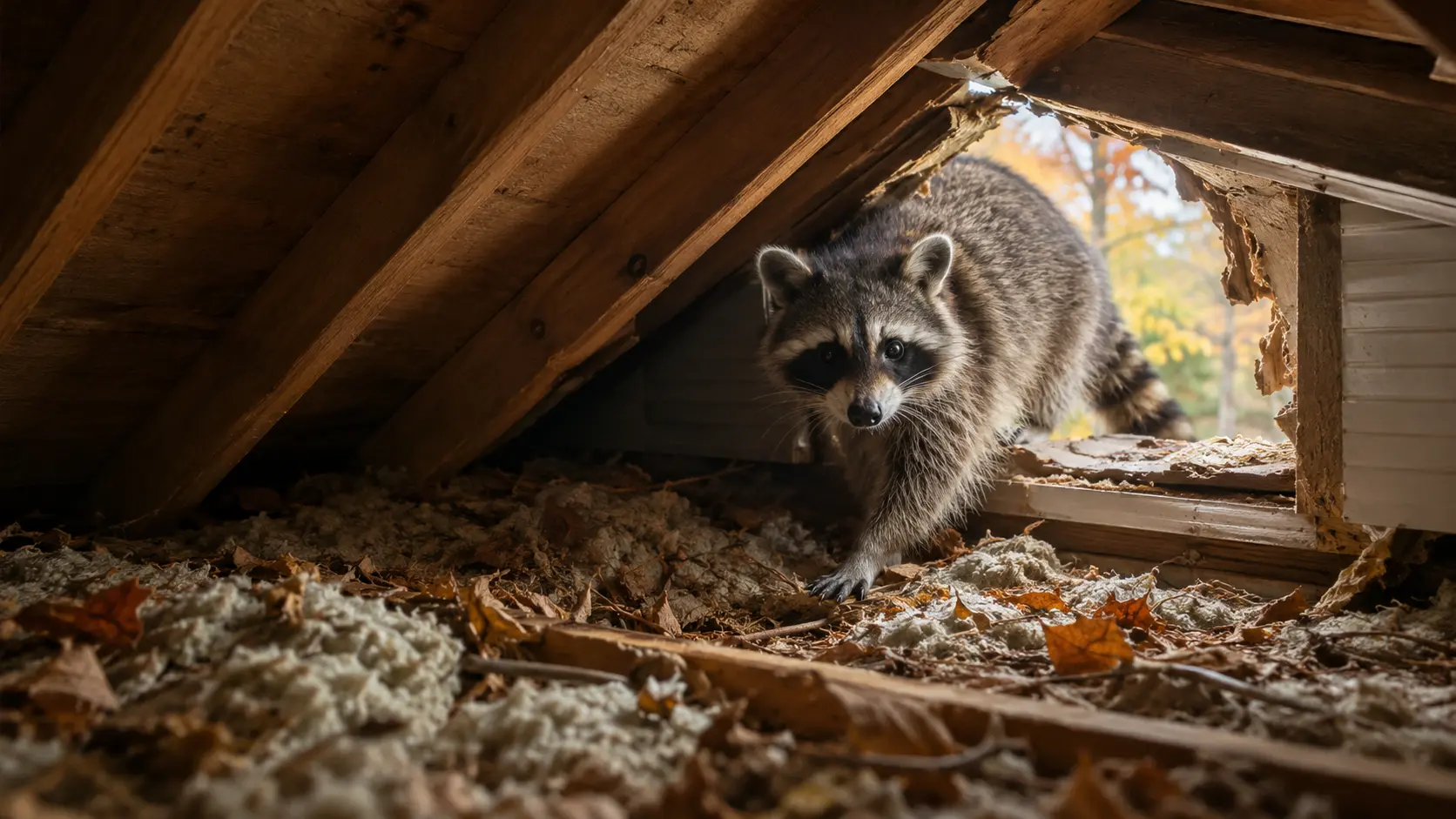
Raccoons are clever, adaptable animals that spend much of their time searching for food and shelter. As fall arrives in Locust Grove, your attic can become especially appealing because it offers warmth, darkness, and protection from changing weather. A small opening near the roof may be all a raccoon needs to turn that quiet space into a den.
If you’re hearing heavy movement overhead, the real concern isn’t simply what made its way inside. It’s how long it has been there, what it may be damaging, and whether it has found a way to stay.
Before the scratching becomes a bigger problem, a free inspection from Direct Pest Solutions can help you understand what’s happening and what needs to be done next. Our wildlife removal services are available for Locust Grove homeowners who would rather have the problem properly handled than keep guessing at what is moving around overhead.
Why Are Raccoons More Likely to Enter Attics During Fall in Locust Grove?
Fall changes the conditions around your home, and raccoons notice those changes quickly. As temperatures drop, they begin looking for protected places where they can rest without dealing with cold nights, rain, and other outdoor conditions.
An attic provides many of those comforts at once. It is elevated, sheltered, relatively quiet, and often contains insulation that can make a convenient nesting material. Homes near wooded areas, mature trees, creeks, and other natural spaces can be particularly attractive because raccoons already have plenty of reasons to stay nearby.
Food availability also matters. Raccoons are opportunistic feeders, so accessible trash, fallen fruit, pet food, gardens, and other food sources can keep them close to residential properties. Once a raccoon discovers shelter nearby, your attic can become an easy place to retreat after feeding.
How Do Raccoons Get Into Your Attic?
Raccoons are surprisingly strong climbers, and reaching your roof may be easier than you think. They can use nearby trees, downspouts, porch posts, siding, and other structures to climb toward potential entry points.
Once they reach the roof, they look for weakness rather than a perfectly sized doorway. Loose soffits, damaged vents, roof gaps, rotted wood, and openings around the roofline can give them enough access to squeeze through or enlarge an existing hole.
Common raccoon entry points include:
- Loose or damaged soffits
- Gaps along the roofline
- Damaged roof vents
- Rotted fascia or roof materials
- Uncovered chimneys
- Broken attic windows
- Openings around pipes or utility lines
- Weak sections of roofing
A nearby tree can make access even easier. Trimming branches can reduce one route onto the roof, but it won’t solve an existing attic problem by itself. If a raccoon is already inside, the animal and its entry point still need to be addressed.
What Are the Signs That Raccoons Are Living in My Attic?
Raccoons are larger than most animals that commonly enter attics, so their presence can become difficult to ignore. You may hear heavy footsteps or thumping overhead, especially when the house is quiet and the animal becomes active.
Noise is only one clue, though. Look for physical evidence around the attic and exterior of your home, especially if the sounds have been happening repeatedly.
Common signs include:
- Heavy scratching, thumping, or scurrying
- Growling, grunting, or other animal sounds
- Damaged soffits or roof materials
- Torn or disturbed insulation
- Leaves, twigs, and other nesting materials
- Droppings or strong odors
- Compressed insulation forming regular pathways
- Damaged wiring or ductwork
- Food scattered around outdoor areas
- Fresh damage around a roof opening
A strong odor can be especially concerning because raccoons may repeatedly use one area as a latrine. The longer they remain inside, the more difficult the cleanup can become.
How Much Damage Can Raccoons Cause in an Attic?
A raccoon may enter through one small weakness, but the damage doesn’t necessarily stay small. Their strength allows them to tear through weak roofing materials, enlarge openings, disturb insulation, and damage other parts of the attic.
They can also create sanitation problems while nesting. Droppings, urine, food remains, and nesting materials can accumulate over time, leaving odors and contamination behind. If the raccoon remains for weeks or returns repeatedly, the cleanup can become much more involved.
Potential attic damage includes:
- Torn or contaminated insulation
- Damaged roofing materials
- Destroyed soffits and vents
- Chewed or damaged wiring
- Torn flexible ductwork
- Damaged wood
- Water intrusion through opened areas
- Nesting material scattered throughout the attic
- Accumulated feces and urine
This is why early action matters. Removing the raccoon before the situation becomes established can make the entire problem easier to manage.
Are Raccoons in the Attic Dangerous?
Raccoons should never be treated like harmless house guests. They are wild animals that can become defensive when cornered, particularly when a mother believes her young are threatened.
Their waste can also create sanitation concerns inside an enclosed attic. Droppings and urine may contaminate insulation and surrounding materials, while direct contact with wildlife creates additional health and safety risks.
If you find evidence of a raccoon den, avoid approaching the animal or reaching into nesting areas. The safest approach is to keep your distance and have the situation assessed properly.
How to Get Rid of Raccoons in Your Attic
Getting a raccoon out is not simply a matter of making the attic uncomfortable. You need to know whether the animal is alone, whether young are present, and how it is getting inside before closing the opening.
1. Find the Active Entry Point
Start by inspecting the roofline, soffits, vents, chimney, and other vulnerable areas. Fresh damage, disturbed materials, droppings, or signs of repeated movement can help identify where the raccoon is entering.
Don’t immediately seal the first opening you find. If the raccoon is still inside, closing that opening could trap it or separate a mother from her young.
2. Use Deterrents With Caution
Bright lights and consistent noise may make an attic less comfortable for a raccoon. A radio or work light can sometimes encourage an animal to move toward an available exit.
These methods are not guaranteed to solve an established infestation. A determined raccoon may simply tolerate the disturbance, especially when it has a nest or young inside.
3. Consider Humane Exclusion
Exclusion focuses on controlling the entry point rather than simply chasing the animal around. A properly installed one-way door can allow the raccoon to leave while preventing it from returning.
This method requires careful timing. The entry point should not be sealed until you’re confident that the raccoon and any young have safely left the attic.
4. Use Professional Trapping When Necessary
Some situations require trapping rather than relying on the animal to leave through an exclusion device. Trapping can be particularly complicated when young raccoons may be present.
Raccoons can become defensive when trapped or cornered. For that reason, professional wildlife removal and trap setting is a safer option when the animal is already established inside your attic.
5. Seal the Entry Point After Removal
Removing the raccoon only solves half of the problem. The opening that allowed it inside must also be repaired, or another animal may eventually discover the same route.
Once the attic is clear, vulnerable soffits, vents, roof gaps, and other openings can be secured. This final step helps turn a temporary removal into a lasting solution.
Why Professional Raccoon Removal Makes More Sense Than DIY
An attic raccoon problem can look simple from the ground. You hear movement, find a hole, and naturally want to close it as quickly as possible. Unfortunately, that approach can miss the animal, its young, additional entry points, or damage hidden inside the attic.
A professional can inspect the attic and exterior together. That makes it easier to identify active entry points, determine whether young are present, choose an appropriate removal method, and secure the property afterward.
Professional removal also saves you from spending days testing different DIY deterrents without knowing whether the raccoon has actually left. When the problem is already inside your home, getting the right answer first can save considerable time and frustration.
Don’t Let Raccoons Make a Home in Your Attic
A raccoon in your attic can quickly become a problem you don’t want to keep dealing with. The longer it stays, the more time it has to disturb insulation, damage materials, and leave behind waste.
Direct Pest Solutions can inspect your attic, find the entry point, check for signs of nesting, and determine the right way to remove the raccoon completely. Once it’s out, the team can seal the opening and address any insulation damage or mess left behind.
You shouldn’t have to keep guessing what’s making those sounds overhead. Request a free quote or call (678) 722-5533 to schedule an inspection and get the problem taken care of.
Frequently Asked Questions
What does a raccoon in the attic sound like?
A raccoon usually creates heavier sounds than smaller attic animals. You may hear thumping, scratching, dragging, scurrying, growling, or chattering, especially at night.
How long will a raccoon stay in the attic?
A raccoon may stay for days, weeks, or longer if the attic provides reliable shelter. A mother with young may remain until her babies are old enough to leave.
What do raccoons hate the most?
Raccoons generally dislike bright lights, loud noises, and unfamiliar disturbances. These may encourage movement, but they rarely solve an established attic infestation by themselves.
Why do raccoons get into attics during fall?
Fall brings cooler temperatures and changing outdoor conditions. An attic offers warmth, shelter, darkness, and protection, making it an attractive place for raccoons seeking a secure resting or denning area.
Will a raccoon leave my attic on its own?
It might leave temporarily, but that does not mean the problem is solved. If the entry point remains open, the same raccoon or another animal can return.
Is it legal to remove raccoons from my attic in Locust Grove?
Yes, raccoons can be removed from your home in Locust Grove, but how they are trapped, handled, and relocated matters. Georgia has wildlife regulations that apply to raccoon removal, and additional considerations may apply if a mother has young in your attic. If you’re unsure what is allowed, professional wildlife removal can help ensure the situation is handled safely and appropriately.
How quickly can Direct Pest inspect my attic in Locust Grove?
Once an appointment is scheduled, a technician can inspect your attic and identify the likely source of the activity. Request a free quote online or call (678) 722-5533 to schedule an inspection with Direct Pest Solutions.