
12 Signs You Have Squirrels in Your Attic in Locust Grove
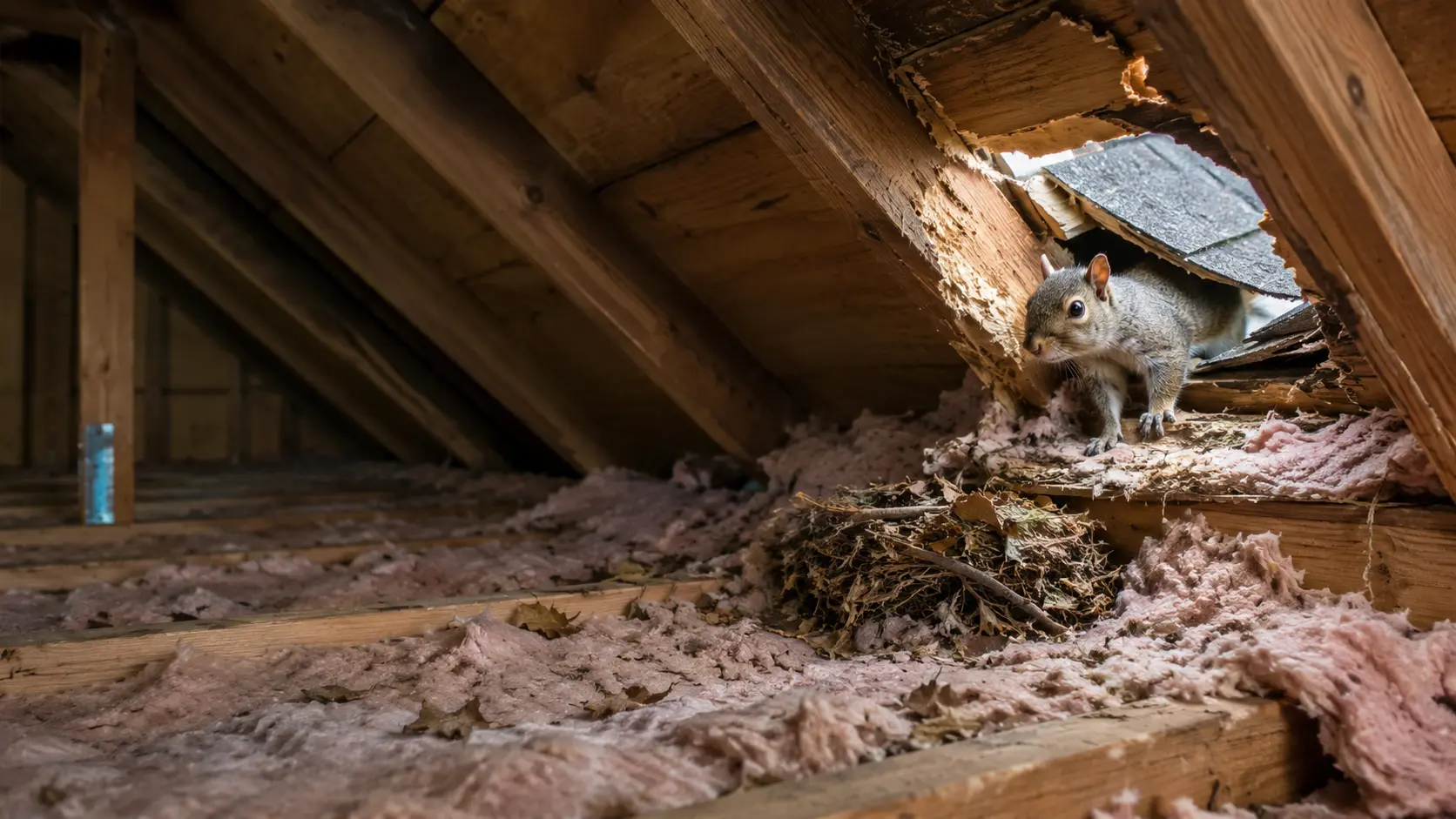
If you hear something running across the ceiling, scratching above your bedroom, or chewing somewhere near the roof, it is easy to assume you have mice or rats. But squirrels can make their way into attics, too, and they tend to leave a different set of clues.
The timing of the noise is one of the first things worth noticing. Squirrels are generally active during the day, so repeated daytime scampering combined with roof activity, chewing, nesting material, or an opening near the roofline can make squirrels a much stronger possibility.
If you think squirrels may have gotten into your Locust Grove home, Direct Pest Solutions can help. We can inspect the areas where you are seeing or hearing activity, identify how the animals are getting inside, and provide the right wildlife control services to get the problem under control.
12 Ways to Tell If You Have Squirrels in Your Attic
No single clue proves that squirrels are living above your ceiling. A scratching sound could come from several animals, and a hole in the roof could have more than one explanation.
What matters is the pattern.
If you are hearing activity during the day and finding physical evidence around the attic or roofline, you have more reason to suspect squirrels. Here are signs worth checking.
1. You Hear Scratching and Scampering During the Day
Squirrels are most active during the day, so scratching, running, or thumping sounds in your attic during daylight hours can be a strong clue. You may hear them moving across the attic floor, inside the walls, or along the roof. If the noise keeps happening around the same time each day, pay attention to it.
2. You Hear Gnawing or Chewing
Squirrels need to constantly wear down their teeth, so they may chew on wood, roof materials, soffits, and other parts of your home. If you hear repeated gnawing near the roof or attic, do not ignore it. Chewing can create larger openings and allow more wildlife to get inside.
3. You See Squirrels Around Your Roof
Seeing squirrels running across your roof, climbing near the eaves, or moving between nearby trees and your house can be a warning sign. Squirrels are good climbers and can use trees, fences, and other structures to reach the roof. If you regularly see them around the same part of your home, check that area for possible entry points.
4. You Find a Possible Entry Point
Squirrels can get into attics through gaps around soffits, fascia, vents, roof edges, and other weak spots. Look for holes, loose materials, chewed areas, or damage near the roofline. A small opening can be enough for a squirrel to get inside and make it larger over time.
5. Your Attic Insulation Looks Disturbed
Squirrels may move, tear apart, or flatten insulation while creating a place to rest or nest. You might notice sections that look pulled apart, compressed, or pushed into corners. Freshly disturbed insulation can be another clue when combined with noise or other signs of activity.
6. You Find Nesting Material
Squirrels may build nests using leaves, twigs, paper, insulation, and other soft materials they find around a home. If you find a pile of nesting material in your attic, especially near an entry point, there may be an active animal nearby. Avoid disturbing the nest until you know there are no young squirrels inside.
7. You Find Squirrel Droppings in the Attic
Squirrel droppings can appear in areas where squirrels regularly move, rest, or nest. Finding droppings alongside nesting material, chewed surfaces, or other damage can point to an active infestation. Avoid handling or disturbing droppings yourself, especially in an enclosed attic space.
8. You Find Nuts or Food Stored in the Attic
Squirrels sometimes carry nuts and other food into sheltered areas. Finding acorns, seeds, or other food tucked into insulation, corners, or nesting areas can be a sign that squirrels are using your attic. Several food caches in different areas can indicate repeated activity.
9. You Notice a Strange Odor in the Attic
An unusual smell in the attic can develop when animals spend a lot of time in the space. Urine, droppings, nesting material, or a deceased animal can all contribute to an unpleasant odor. If the smell appears alongside other signs of squirrel activity, the attic should be inspected.
10. You Find Chewed Electrical Wiring
Squirrels may chew through the insulation around electrical wires, leaving sections exposed. Damaged wiring can create a serious electrical and fire hazard. If you find chewed or exposed wires in your attic, avoid handling them and have the damage checked by a qualified professional.
11. You Find Damage Around the Roofline
Look for gnaw marks, damaged soffits, loose vents, or holes around the edges of your roof. Squirrels can chew through weak materials to create or enlarge an entry point. Fresh damage near an area where you hear or see activity is a strong reason to investigate further.
12. The Activity Keeps Coming Back
You may hear scratching, see squirrels near the roof, or find new signs even after the noise temporarily stops. This can happen when squirrels are leaving the attic during the day but still have easy access to return. Recurring activity usually means the entry point has not been addressed.
How Do Squirrels Get Into Attics in The First Place?
Squirrels are excellent climbers, and a home surrounded by trees can give them an easy route to the roof. Once they reach the roofline, they may take advantage of an existing gap or chew through a weak spot.
Gaps Around Soffits and Fascia
Soffits and fascia can develop gaps as materials age, loosen, or become damaged. These areas are worth checking if squirrels are repeatedly appearing near the roofline.
Roof Vents and Other Openings
Vents need to allow air to move while keeping animals out. Damaged screens, loose covers, or gaps around the vent can create an opportunity for wildlife to enter.
Damaged Roof Materials
A damaged section of roofing can become an entry point, particularly if it creates access to the space underneath.
Tree Branches That Give Squirrels Roof Access
A tree does not need to touch your house for squirrels to use it as a route. Branches close to the roof can give squirrels an easy path toward the house.
Small Gaps Around the Roofline
Not every entry point will be obvious from the ground. Small openings around roof joints, vents, eaves, or other exterior features can be easy to overlook.
Are Squirrels in the Attic Dangerous?
Squirrels in the attic can create real problems, particularly if they stay long enough to nest, chew materials, or damage wiring.
The concern is not that every squirrel will cause serious damage. The concern is that you cannot always see what the animal is doing once it disappears above the ceiling.
- Electrical Damage: Chewed electrical insulation can expose wiring and create a potential fire hazard. This is one of the more serious reasons to address squirrel activity rather than simply waiting for the animal to leave.
- Damage to Your Home: Squirrels can chew through materials around an entry point, including soffits, siding, and roof materials. An opening can become larger if the animal keeps using the same route.
- Droppings and Urine: Waste can accumulate around areas where squirrels spend time. This can leave odors and contaminate insulation or other attic materials.
- Nesting in the Attic: An attic can provide a protected place for squirrels to raise young. That makes the situation more complicated because removing an adult without checking for dependent young can leave animals trapped inside.
- Young Squirrels Can Change the Situation: A quiet attic does not necessarily mean an empty attic. If you suspect a nest, it is better to have the situation checked before sealing an opening.
How Do You Get Squirrels Out of an Attic?
The first step is figuring out what is actually inside.
Once squirrels are confirmed, the next job is finding the entry point and determining whether there is a nest or young. The opening should not simply be sealed while an animal may still be inside.
- Identify the animal causing the activity.
- Locate the entry point or points.
- Check for nesting activity and dependent young.
- Use an appropriate removal or exclusion method.
- Confirm the squirrels are out.
- Seal the entry points so they cannot get back inside.
- Assess and address any damage left behind.
UGA identifies exclusion as an effective long-term approach for nuisance wildlife and emphasizes keeping animals from re-entering buildings after removal.
This is also why simply stuffing a hole with whatever material you have nearby is not a great solution. If the animal is still inside, you can turn an unwanted guest into a trapped one.
How to Keep Your Attic Squirrel-Free
Keeping squirrels out usually starts outside the attic. Look at how they are getting onto the roof and what openings could give them access.
A few changes around your home can make re-entry much harder:
- Trim branches away from the roof: Keep tree limbs from creating an easy bridge onto your roof. This is especially important for mature trees close to the house.
- Secure vents and openings: Install sturdy screens over roof and gable vents, and repair loose soffits, fascia, and other weak areas.
- Check the roofline regularly: Look for small gaps, damaged shingles, or areas where squirrels have started chewing. Catching damage early makes repairs much easier.
- Move bird feeders farther away: Seeds and nuts can keep squirrels coming back to the property. Position feeders away from the house and roofline when possible.
- Keep food and debris under control: Fallen fruit, accessible trash, and piles of yard debris can give wildlife another reason to stay close to your home.
- Watch for new activity: Scratching sounds, fresh chew marks, or damaged screens can be an early warning that another squirrel is testing the property.
Professional Squirrel Removal Is the Safer Choice
Squirrels may look harmless in the backyard, but an attic is a different situation. Once they’ve moved inside, trying to chase them out or seal the opening yourself or with DIY methods can leave you with a trapped animal, a hidden nest, or another squirrel finding the same way in.
Professional removal takes the guesswork out of the process. A trained technician can inspect the attic and exterior, locate the active entry point, check for nesting or young, and determine the safest way to remove the squirrels. The opening can then be secured so the problem doesn’t simply start over.
This is especially important when squirrels have already damaged insulation, wiring, vents, or roofing. Rather than spending days trying different deterrents and hoping they work, have the attic inspected and the problem handled properly from the start.
Remove Squirrels and Protect Your Attic Today
If you are hearing scratching during the day, finding chewed wiring, disturbed insulation, squirrel droppings, or seeing squirrels around your roof, there may be more than one squirrel passing through. Direct Pest Solutions can inspect your Locust Grove home to confirm what is causing the activity and find how the squirrels are getting into your attic.
We check the attic and exterior for nesting areas, damage, and entry points around the soffits, roofline, vents, and other vulnerable areas. Once we identify the problem, we can determine the appropriate removal method, address the access points, and help prevent squirrels from getting back inside.
Don’t wait for the scratching, chewing, or roof damage to get worse; request a free quote or call (678) 722-5533 to schedule an inspection.
Frequently Asked Questions
Are squirrels active at night in attics?
Usually, no. Gray squirrels are primarily active during the day, so repeated attic noise at night may point to another animal. Mice, bats, and flying squirrels are among the possibilities UGA Extension lists for nighttime attic activity.
Can squirrels leave an attic on their own?
They may leave the attic during the day to look for food, but that does not mean they have abandoned the space. If an attic provides shelter and a usable entry point, squirrels may continue returning.
How long can squirrels stay in an attic?
There is no fixed amount of time. A squirrel may continue using an attic as long as it can access the space and finds it useful for shelter or nesting.
Is it legal to remove squirrels from your attic in Locust Grove?
Squirrels can be removed from homes in Locust Grove, but the method matters. Wildlife removal should follow applicable Georgia’s wildlife regulations, particularly when young squirrels may be present or when trapping and relocation are involved. Professional wildlife control helps ensure the removal process is handled safely and within applicable requirements.
What should I do if I find squirrel droppings in my attic?
Avoid touching the droppings or disturbing contaminated materials unnecessarily. If you also have other signs of animal activity, an inspection can help identify what has been using the attic and what cleanup may be needed.
What is the fastest way to get rid of squirrels in attics?
The fastest lasting solution is to have the squirrel activity professionally identified and removed, followed by sealing the entry points. This avoids spending time trying multiple deterrents without knowing whether the squirrel is actually gone.
What smells do squirrels hate in the attic?
Strong scents such as ammonia or vinegar may discourage squirrels temporarily. However, scents alone rarely solve an established attic problem because they do not remove the animal or prevent it from returning.
How quickly can a removal team inspect my attic in Locust Grove?
Once an appointment is scheduled, a technician can inspect your attic, identify what is causing the activity, and determine the appropriate removal approach. Request a free quote online or call (678) 722-5533 to schedule an inspection with Direct Pest Solutions.