
Joro Spider Season in McDonough: Why They're Common in Fall
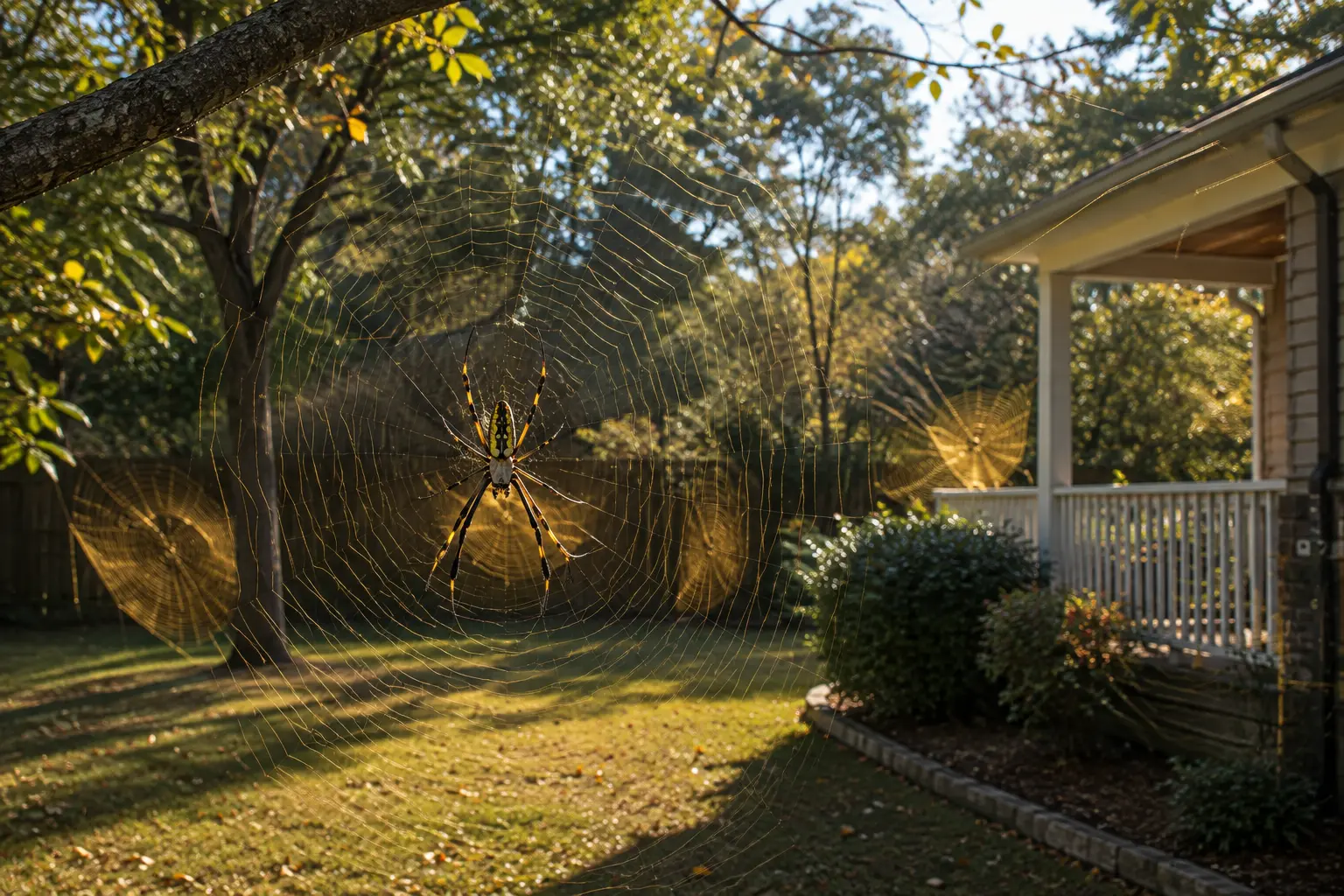
If you live in McDonough, you may notice the same thing every fall: large, golden webs showing up around your yard. Joro spiders become hard to miss once they reach their full size, especially when their webs start stretching between trees, fences, porches, and other outdoor spaces.
These spiders spend much of the year growing before becoming the large, web-building spiders most homeowners recognize. By fall, their size and bright coloring make them much easier to spot, while their webs can seem to show up everywhere at once.
If you’re tired of clearing webs from your porch or walking through them every time you step outside, understanding what drives their fall activity can help. And when spider activity becomes more than you want to handle yourself, Direct Pest Solutions offers free inspection and expert Joro Spider control services in McDonough.
Let’s look at when Joro spider season starts, why these spiders become so noticeable in fall, and what you can do to keep them under control.
When Does Joro Spider Season Start and End?
Joro spider season in McDonough generally starts around August and continues through late October, although weather can shift the timing slightly. This is when the spiders reach maturity and their large golden webs become much easier to spot around homes and yards.
By late fall, adult Joro spiders begin reaching the end of their life cycle. Most die after temperatures drop significantly, while their eggs remain behind and hatch the following spring. This is why the spiders can seem to disappear in winter only to return the following year.
Why Fall Brings Out So Many Joro Spiders
Joro spiders don’t suddenly appear when fall arrives. Their activity becomes more noticeable because this is when they have reached maturity and are easier to spot around homes and yards.
Shorter Days and Cooler Temperatures Drive Activity
As the season changes, mature Joro spiders become more active around the places where they build their webs. Females also reach the later stages of their life cycle during fall, making them larger and much more noticeable than they were earlier in the year.
The cooler weather doesn’t necessarily make Joro spiders appear out of nowhere. Instead, fall is when their size, webs, and activity are most obvious to homeowners.
Georgia’s Long Summers Give Them More Time to Grow
Georgia’s warm climate gives Joro spiders plenty of time to feed and develop before fall arrives. By the time temperatures begin to cool, they have had months to grow and reach maturity.
That helps explain why the spiders and their webs seem so much larger later in the year. A spider that went unnoticed during the warmer months can become hard to miss once fall activity picks up.
Fall Insects Keep Joro Spiders Well Fed
Joro spiders depend on the insects caught in their webs, and fall does not mean that their food supply suddenly disappears. The opposite. Flies, mosquitoes, moths, and other flying insects can remain active around homes well into the season, particularly during Georgia’s relatively warm fall weather.
Properties with outdoor lights, gardens, flowering plants, standing water, or dense landscaping can attract insects and give spiders plenty of places to find food. When a Joro spider finds an area where insects regularly pass through, it has a good reason to keep its web there.
Mature Spiders Become More Noticeable During Reproductive Activity
Fall is an important time for Joro spider reproduction. During this period, males leave their own areas and search for female spiders to mate with. This can make male Joro spiders more mobile and more likely to be spotted around the yard, on plants, near structures, and around the large webs built by females.
After mating, females remain in their webs and eventually produce egg sacs. These sacs protect the next generation through the colder months, with the young spiders emerging later when conditions become more favorable. This reproductive activity is another reason they can seem more active and more noticeable during this time of year.
Larger Webs Become Harder to Miss
By fall, mature Joro spiders have had months to grow and establish themselves around the property. Their webs can become large enough to stretch between trees, shrubs, fences, porch railings, and other structures, often appearing directly across areas homeowners use every day.
The change in seasons can make those webs even more obvious. Morning dew can outline every strand, while falling leaves and thinning vegetation can expose webs that were previously hidden among dense summer growth. A Joro spider may have been living around the property for weeks without drawing much attention. By fall, its size and web can make that almost impossible.
Are Joro Spiders Invasive?
Yes, they are.
Joro spiders are not native to the United States and were first recorded in Georgia in 2014. Since then, they have spread across much of the state and into other parts of the Southeast.
They also don’t suddenly appear when fall arrives. Joro spiders hatch in spring and spend the warmer months feeding and growing. By late summer and fall, they have reached a much larger size and begin building the large, golden webs that make them so easy to spot.
Young Joro spiders can also travel surprisingly far through a process called ballooning. They release strands of silk that catch air currents, allowing them to drift to new locations. This helps explain how the species has continued spreading into new areas.
Their growing presence around McDonough isn’t necessarily a sign of a dangerous pest. Joro spiders are generally not aggressive toward people, but their size, webs, and increasing numbers can make them a noticeable nuisance around homes.
What Attracts Joro Spiders to Your McDonough Property
Several features around your home can make your property more appealing to Joro spiders, especially when they’re active in late summer and fall.
- Outdoor lighting and insects: Porch and entryway lights attract flying insects, giving Joro spiders an easy source of food. Turning off unnecessary outdoor lights at night can help reduce insect activity around your home.
- Trees, shrubs, and structures: Joro spiders need sturdy places to anchor their large webs. Trees, fences, porch columns, sheds, and overgrown shrubs can all provide convenient spots for web building.
- Sheltered areas: Less disturbed areas around sheds, garages, dense vegetation, and other outdoor structures can give Joro spiders places to build webs without being disturbed.
- Plenty of insect activity: Joro spiders follow their food source. If your property has a high number of flying insects, it may naturally attract more spiders looking for an easy meal.
Signs of Joro Spider Infestation
A few Joro spiders aren’t necessarily a concern, but repeated activity around your property can signal a larger problem. Watch for:
- Large golden webs between trees, fences, shrubs, or structures
- Several Joro spiders gathering in the same areas
- New webs appearing shortly after you remove them
- Egg sacs attached to vegetation or sheltered outdoor areas
- Joro spiders around porches, sheds, and garages
- Increasing spider activity as fall progresses
If these signs keep showing up around your property, it’s worth addressing the activity before it becomes harder to manage
How to Get Rid of Joro Spiders Ahead of Their Season
The best time to deal with Joro spiders is before their webs start covering your yard. Taking preventive steps early can reduce the conditions that make your property attractive to them.
- Reduce outdoor lighting: Turn off unnecessary porch and landscape lights at night. Fewer lights can mean fewer flying insects around your home, which removes an easy food source for Joro spiders.
- Trim back vegetation: Keep shrubs, vines, and overgrown branches trimmed away from your home. This reduces some of the sheltered spaces Joro spiders can use for web building.
- Clear yard clutter: Remove piles of leaves, debris, unused equipment, and other clutter where insects and spiders can find shelter.
- Remove webs as you find them: Regularly clearing webs from porches, fences, trees, and other outdoor areas can help keep spider activity from becoming established.
- Control other insects: Joro spiders follow their food source. Keeping common flying insects around your property under control can make your yard less attractive to them.
Get Professional Joro Spider Control in McDonough
Joro spiders can be part of the fall landscape in McDonough, but you don’t have to spend the season clearing webs from your porch, walkways, and yard. When activity keeps coming back, professional treatment can address the conditions that are allowing spiders to stay around your property.
Direct Pest Solutions can inspect your property, look for areas where Joro spiders are building webs, and help reduce the insects that attract them in the first place. Our Joro spider control services are designed to help keep recurring spider activity under control throughout the season.
If you’re already seeing more webs around your McDonough home, there’s no need to wait for the problem to get worse. Schedule a free inspection or call (678) 722-5533 to get started.
Frequently Asked Questions
Why are Joro spiders so big in McDonough, GA?
McDonough’s long, warm growing season gives Joro spiders plenty of time to feed and mature. By fall, they have reached their full size and their webs become much easier to notice.
How poisonous is a Joro spider?
Joro spiders are venomous, but their venom is not considered dangerous to humans. They are generally not aggressive, and bites are uncommon. When bites do occur, they are usually associated with handling or disturbing the spider.
What kills Joro spiders?
Insecticides labeled for spider control can kill Joro spiders when applied according to the product label. Physical removal with a broom or vacuum can also help with individual spiders and webs.
What animal kills Joro spiders?
Birds, wasps, and other predators can feed on Joro spiders. Cold weather also naturally ends the life cycle of most adult spiders each year.
Do Joro spiders come back every year?
Yes. Adult Joro spiders die off during winter, but their eggs survive and hatch the following spring. New spiders mature and become noticeable again later in the year.
Should you kill Joro spiders?
Joro spiders are generally not dangerous to people, but their large webs can become a nuisance around homes. If they’re covering areas you regularly use, removing them can make your outdoor space more comfortable.
How quickly can a technician come to inspect my home in McDonough?
As soon as an appointment is scheduled, a technician can inspect your home and determine the best way to address the Joro spider activity. Request a free quote online or call (678) 722-5533 to schedule an inspection